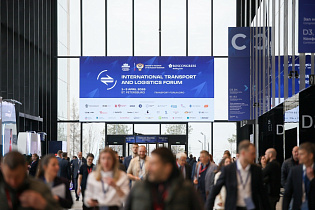
“The first day of the International Transport and Logistics Forum showed that Russia has succeeded in establishing a genuine international dialogue about the key focuses for the development of the transport system. We can now confidently say that in 2026 transport has emerged as a strategic instrument for geoeconomic sustainability and the new architecture of Greater Eurasia. The International North–South Transport Corridor, the Trans-Arctic Transport Corridor (Northern Sea Route), and CIS multimodal supply chains are all gaining prominence, while seamless digital platforms are reducing border crossing times and dramatically boosting throughput capacity. These solutions will help to create competitive routes across the continent, integrate national routes into a unified transport system, and attract new players. Shipment routes are now chosen not only based on speed and cost, but also in terms of their resilience to geopolitical risks, the accessibility of financial infrastructure, and the transparency of digital procedures,” Adviser to the President of the Russian Federation and Executive Secretary of the Forum’s Organizing Committee Anton Kobyakov said.
The business programme on the first day focused on three interconnected components in the development of the transport system: the sustainability of industry logistics, the forging of new Eurasian connectivity, and the large-scale digital transformation of the transport sector.
The discussions particularly emphasized the technological shift that is occurring within the industry itself: autonomous shipping, unmanned freight transport, AI-driven routing, digital twins of the transport system, biometric screening at border crossings, the transition to electronic transport documentation, and the replacement of up to 70% of Western software with domestic solutions.
The Forum essentially marked a transition from viewing logistics merely as a function of physical movement to regarding transport as a platform for managing economic growth, security, and international connectivity.
Key figures of the first day
• 21.5 million tonnes: annual cargo volume transported via the North–South corridor
• 70–109 million tonnes: target cargo flow for the Northern Sea Route by 2030
• RUB 140 billion: R&D investment in transport mobility over the next three years
• 58 hours vs. 24 hours: reduction in travel time for the St. Petersburg–Kazan route using an autonomous truck
• 16 satellites: a constellation has been deployed to support autonomous shipping
• 65 ms: data transmission latency for remote vessel control
• 70%: share of foreign software in the transport sector already replaced by domestic solutions
• >RUB 1 billion per year: confirmed economic impact of AI-driven optimization at airports
• Up to 10 minutes: standard target for border crossing processing time
• +40%: growth in road network efficiency driven by dry ports and enhanced logistics infrastructure
Logistics and transport industry
The Forum highlighted a shift in logistics from a model of a localized, sector-specific function to a systemic driver for industry, foreign trade, and investment projects. The primary focus was on supply reliability, the sustainability of multimodal supply chains, and the evolution of project logistics and specialized solutions for shipping, aviation, road transport, and the handling of oversized industrial cargo.
One key point raised during the discussions was that the cost of logistics disruptions now directly impacts the CAPEX of major industrial facilities: with a three- to four-year construction cycle, even a six-month delay in deliveries can lead to a sharp escalation in the overall cost of an investment project.
Facts and figures
• 21.5 million tonnes: cargo volume of the North–South corridor
• 58 hours → 24 hours: reduction in transit time for autonomous freight transport
• 600,000 tonnes: volume of project cargo transported without incidents
• 8 → 27 million tonnes: increase in the throughput capacity of the Lower Don River after the launch of the Bagayevsky Hydroelectric Complex
• 11.6 million tonnes of CO2: emissions by the Aeroflot Group
• 30%: reduction in specific emissions over 15 years
• 33%: increase in road service life achieved through new technologies
Key conclusions
1. Logistics is becoming a key factor in the return on investment for major capital projects, particularly in the industrial and petrochemical sectors.
2. Supply regularity is more critical than one-off speed: the predictability of freight flows is paramount for continuous manufacturing processes.
3. Autonomous shipping and unmanned freight transport are transitioning from the pilot phase to actual commercial operation.
4. Project logistics for oversized cargo requires a new model of inter-agency coordination among government bodies, carriers, and customers.
5. The environmental agenda in aviation and road construction is now directly linked to the industry’s global competitiveness.
Global connectivity and transport corridors
The main theme of the day was transport corridors as the new architectural framework of Greater Eurasia.
The North–South corridor, the eastern route via Iran, the overland bypass of the Black Sea, the Arctic Transport Corridor, the China–Russia–Middle East link, and the CIS routes were presented as key components of the continent’s new logistical geometry.
Facts and figures
• 70–109 million tonnes: target volume for the Northern Sea Route by 2030
• 20 days: transit time from Ningbo to Felixstowe via new routes
• USD 10 billion: Sri Lanka’s investment in ports and airports
• 44th place: Tajikistan’s ranking in road quality
• +40%: positive impact of dry ports on road infrastructure
• 10 minutes: target time for border crossing procedures
Key conclusions
1. The North–South corridor has firmly established itself as a strategic pillar of Eurasian trade.
2. The Arctic route is viewed as an independent transport pathway that can bypass traditional maritime chokepoints.
3. Unified tariff conditions and a single route operator are critical requirements for Greater Eurasia.
4. Growth in intra-continental freight transport is set to accelerate against the backdrop of geopolitical risks affecting traditional maritime routes.
5. Investment in border crossings, dry ports, and logistics hubs is becoming the most cost-effective segment of transport infrastructure.
Digitalization and the future of transport
The main structural conclusion from this section is that transport is rapidly evolving into a digital platform, where the management of cargo flows, resources, and the customer experience is powered by AI, big data, biometrics, digital twins, and autonomous systems.
Digitalization is already producing direct financial benefits: from billions in cost savings for airports to a complete transition toward electronic shipping documents and national B2G platforms. Moreover, the industry is entering a new phase as it shifts from digitalizing processes to autonomizing transport systems themselves.
Facts and figures
• 70%: Western software replaced
• 90%: target level of import substitution by 2030
• >RUB 1 billion: annual savings at Sheremetyevo Airport
• 50% of processes: AI coverage target at Aeroflot
• 312 types of documents: current volume of documentation required for entry/exit procedures
• 13 million: electronic train driver route sheets processed
• 60% of traffic: proportion of traffic using transponders on toll roads
Key conclusions
1. AI has already become a tool that can directly reduce OPEX in airports, logistics, and railway management.
2. The primary untapped reserve for efficiency is to completely eliminate paper-based documentation in international transport.
3. Biometrics, electronic queuing systems, and smart border crossing points are becoming the standard in international trade.
4. The future of the industry lies in integrating digital platforms with AI agents and autonomous transport.
5. The main constraint on further digitalization is the lack of skilled developers and industry architects.