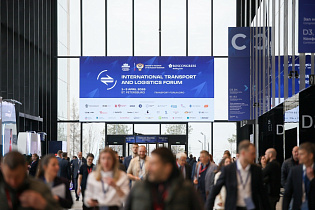
The modernization of border crossing points across Russia’s state border and the introduction of digital technologies at these facilities will be discussed at the International Transport and Logistics Forum, which will take place in St. Petersburg on 1–3 April 2026.
The Forum agenda includes key aspects of developing international transport corridors, where border crossing points are becoming increasingly central. Their modernization has a decisive impact on the development of these corridors, expanding the country’s foreign economic potential and supporting its integration into the Eurasian transport and logistics space.
To achieve these goals, Russia is implementing the large-scale federal project “Development of Border Crossing Points across the State Border of the Russian Federation,” which is part of the national project “Efficient Transport System.” Its objective is to increase the capacity of border checkpoints several times over. Another priority task is fulfilling the President’s directive to reduce truck inspection times to 10 minutes by 2030.
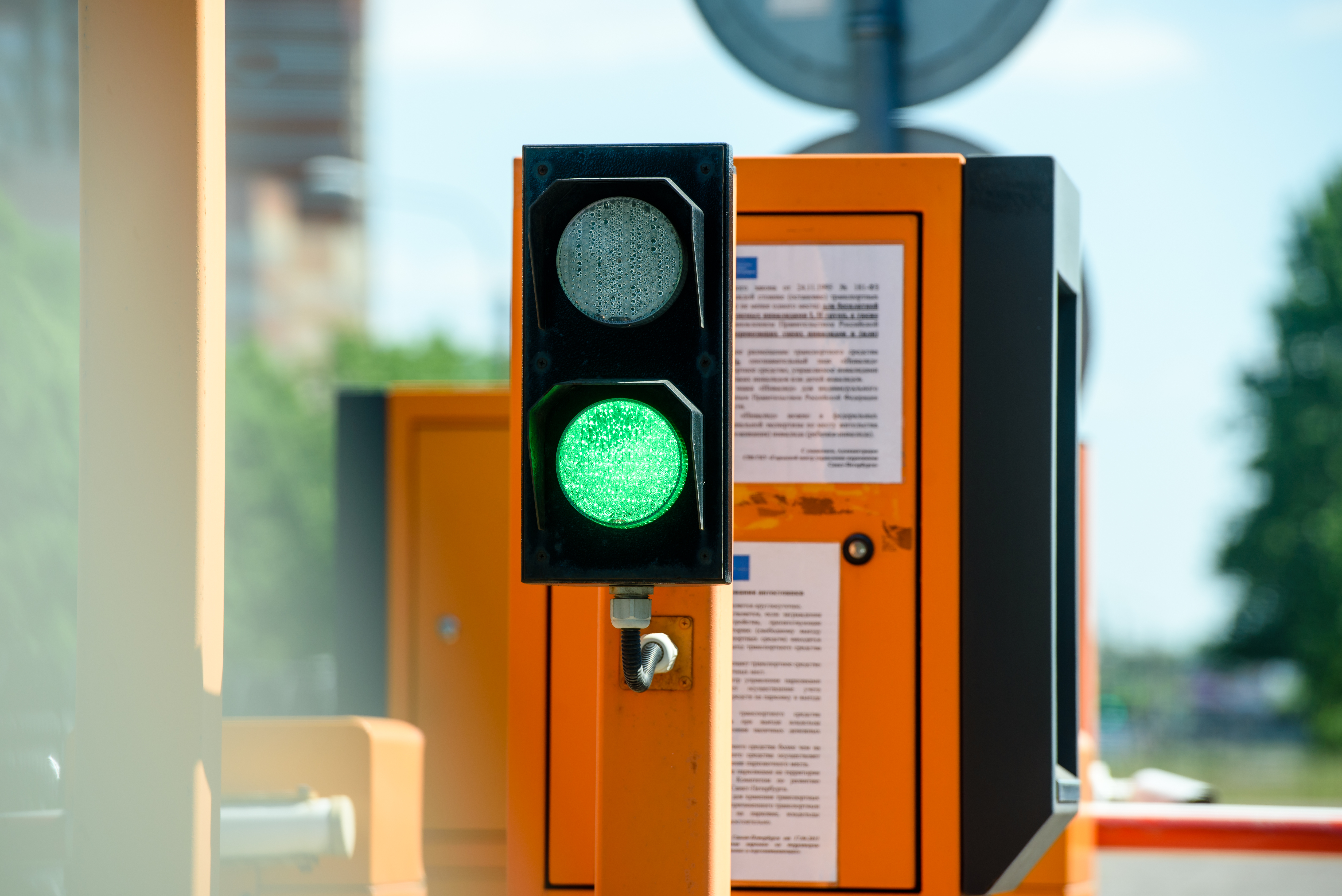
Border crossing points serve as entry gates to international transport corridors. They are the country’s calling card and key infrastructure facilities. Their development makes it possible to increase trade turnover and strengthen economic ties with other countries. “There are currently 314 operating border crossing points in Russia, of which 87 handle more than half of the cargo transiting key transport corridors. These have been designated as priority sites. Primary attention is being given to Eastern and Southern directions, where infrastructure is being modernized and digital solutions are being implemented,” said Gennady Bezlobenko, head of RosgranStroy.
A comprehensive approach has already made it possible to increase the capacity of road border crossings. On the border with Azerbaijan, capacity has grown fivefold, up 1,500 vehicles per day, from 400 to 1,900. With Mongolia, it has increased 2.4 times, up 200 vehicles per day, from 150 to 350. With Georgia, capacity has doubled, up 800 vehicles per day, from 700 to 1,500. With China, it has tripled, up 1130 vehicles per day, from 550 to 1,680. With Kazakhstan, it has increased by 1.1 times, up 500 vehicles per day, from 5,500 to 6,000.
By 2030, it is planned to build and reconstruct 27 facilities along key international trade routes, which will significantly increase the capacity of both rail and road border crossing points.
Special attention is being paid to the digitalization of border crossings through the introduction of technologies such as biometrics, portal scanners, and electronic queuing systems. These efforts lay the foundation for the creation of a unified customs space across the Eurasian continent. The implementation of electronic transport documents, the integration of customs and transport systems, and real-time data exchange will enable synchronized operations across border crossings and more efficient distribution of traffic flows. This approach will enhance Russia’s competitiveness as a logistics hub and create conditions for seamless freight transportation by synchronizing national platforms without requiring structural changes. As a result, border crossing points are evolving beyond traditional control functions into technological nodes within a unified digital environment.
Participants of the Forum will discuss the principles of building a seamless Eurasian space and integrating national transport and logistics routes into the global transport network. Particular attention will be given to the development of the East–West and North–South corridors, the expansion of the Northern Sea Route, and the diversification of routes toward the Persian Gulf. Key discussions within this track will include digital solutions for the effective management of border crossings and the development of a digital Eurasian transport corridor aimed at synchronizing transit flows at the intersection of the CIS and China through a unified digital space.
The Forum is being held in accordance with the instructions of the President of the Russian Federation aimed at ensuring the global competitiveness of Russia’s transport corridors, including the implementation of national development goals through 2030 and with a longer-term outlook to 2036.
The Ministry of Transport of the Russian Federation is the organizer of the Forum, while the Roscongress Foundation serves as the operator with the support of the Government of the Russian Federation.
More information about the Forum is available at: transport-forum.org
Media representatives may register for the Forum until 20 March 2026 via the registration link on the website.