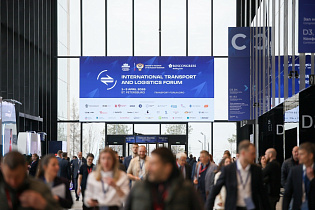
Russia and Belarus have launched direct suburban train service along the Smolensk–Orsha and Smolensk–Vitebsk routes. The official ceremony marking the event took place on the 30th anniversary of the Day of Unity of the Peoples of Russia and Belarus. The following officials took part in the ceremony via video link from the International Transport and Logistics Forum: Deputy Chief of Staff of the Russian Presidential Executive Office Maxim Oreshkin; Deputy Prime Minister of the Government of the Russian Federation Vitaly Savelyev; Minister of Transport of the Russian Federation Andrey Nikitin; Minister of Transport and Communications of the Republic of Belarus Alexey Lyakhnovich; and Russian Railways Chief Executive Officer – Chairman of the Executive Board Oleg Belozerov. Smolensk Region Governor Vasily Anokhin attended from the Smolensk Railway Station.
With transfers being eliminated on these routes, passengers on these suburban trains will save between 1.5 and 3 hours on their journeys. Preliminary estimates indicate approximately 110,000 passengers will use these new electric trains over the next three years. There are also plans to launch modern train services connecting Russia’s Pskov and Bryansk Regions with the Belarusian cities of Polotsk, Vitebsk, and Gomel.
“The opening of cross-border railway routes between Russia and Belarus is a historic solution for the Union State. It is a significant step towards establishing a unified transport system for our countries and enhancing people’s quality of life. We are saving passengers their most valuable resource – time. In the past, a similar journey between Vitebsk and Smolensk took up to five hours. Now, it takes just two,” Nikitin said.
The transport services are provided by Central Exurban Passenger Company (CEPC). The total travel time between Smolensk and Vitebsk will be two hours, while the trip from Smolensk to Orsha will take one hour and 40 minutes. Tickets can be purchased at station ticket offices along the routes, as well as through Russian Railways’ online services. Tickets will also be available for purchase on the official CEPC website and via the CEPC Timetables and Tickets mobile app in the near future.
“Preparations for this launch were conducted through close collaboration between the railway professionals of both countries. Experts meticulously coordinated the timetables to ensure seamless and comfortable connectivity. The schedules for these cross-border suburban trains have been carefully synchronized with the timetables of long-distance trains travelling to Moscow, Minsk, Brest, Mogilev, Murmansk, and the resorts of the North Caucasus. The rolling stock, locomotive crews, and infrastructure were already fully prepared by the time service commenced,” Belozerov said.
Modern trains have begun running on both routes: two-car RA-3 diesel trains on the Smolensk–Vitebsk line, and four-car EP3D electric trains on the Smolensk–Orsha line. Comfortable Lastochka or Finist trains will be launched in the future.
“The launch of these direct routes will help to strengthen cultural and tourism ties between our countries. To ensure travel is as comfortable and popular as possible, we have deployed modern rolling stock and prepared a convenient schedule that takes into account seasonal demand,” CEPC CEO Ivan Konev said. “Services will operate daily. On peak days, such as summer weekends, there will be up to three pairs of trains running on these routes per day. This opens up a new, affordable travel option for passengers moving between these cities.”
Efforts have been made to synchronize the systems for passenger benefits and fares to ensure that travel remains affordable to all citizens. As a result, passengers belonging to benefit-eligible categories in both Russia and Belarus will be able to utilize fare discounts throughout their entire journey.
In 2025 alone, over three million passengers and 50 million tonnes of cargo were transported by rail between Russia and Belarus.
The ITLF was held in accordance with directives from President of the Russian Federation Vladimir Putin about enhancing the global competitiveness of Russia’s transport corridors, including the implementation of decrees that align with the country’s national goals through both 2030 and 2036.
The Forum was organized by the Ministry of Transport of the Russian Federation with the support of the Government of the Russian Federation and managed by the Roscongress Foundation.
For more about the Forum and its business programme, please visit transport-forum.org.