ABOUT EXHIBITION
- Airports of Regions
- Federal Air Transport Agency (S7 Group, Azimut)
- Aeroflot
- Concern Granit Os-25 and Os-26 UAVs
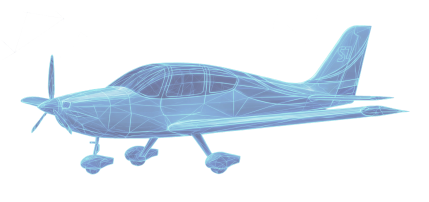
The exhibition of equipment and machinery will also include:


The Airports of Regions stand will show off some of the company’s most important investment projects, such as the modernization of the airports in Orenburg and Blagoveshchensk, a new airport in Arkhyz, Karachayevo-Circassian Republic, and the Omsk-Fedorovka Airport, set to replace Omsk’s existing city airport.
Visitors stopping by the stand will also learn more about the company’s cutting-edge digital solutions: the BAGS ID hardware and software suite enabling passengers to check in and drop off their luggage independently, and the BAGS Search system for locating lost luggage, already serving at 62 airports and 14 airlines.

Aeroflot’s Forum stand will feature a comfortable business lounge and a screen showing an inspiring video of the company brand philosophy entitled ‘Across Russia with Love’.
In keeping with Aeroflot tradition, the stand will be serviced by Aeroflot cabin crew.




Avtodor is a major infrastructure holding company with an extensive network of branches. Responsible for the design, construction, and operation of highways, it boasts unmatched expertise in the provision of roadside services. In the 16 years since its founding, Avtodor has grown to become the country’s largest operator of highways, with projects attracting over RUB 1 trillion of private investment. It is currently responsible for 5,961.3 kilometers of highway.
The unique innovations and technologies to be displayed at its stand include:
The Immersive Technologies Laboratory, which offers designers the unique ability to get behind the wheel to analyze future road design solutions with the use of VR and AR. The laboratory comprises a control station, software, VR system, and dynamic platform.
The Digital Aeroinspector, which will acquaint visitors with the use of unmanned aerial vehicles to monitor road construction projects, and the Free Flow intelligent barrier-free toll collection system.

Sinara-Transport Machines is a manufacturer of electric vehicles for public transport in urban areas. It will be showcasing its latest high-tech innovations at the exhibition.
The 2TE35A mainline freight diesel locomotive with asynchronous traction drive is 10% more powerful than its predecessors.
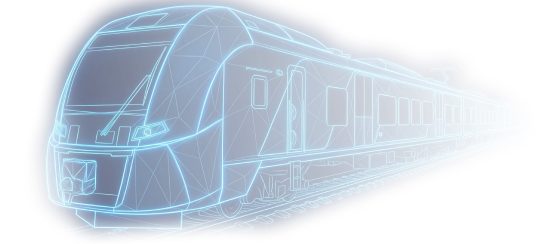
Russia’s first domestically produced high-speed electric train can reach speeds of up to 400 km/h and boasts an aerodynamic design and low drag coefficient that significantly reduces noise and energy consumption.
The Finist electric train is equipped with a Russian-made asynchronous traction motor and has been designed for urban and suburban areas.
Sinara-Transport Machines’ proprietary Sinara-6253 electric bus has already passed certification and environmental tests and is set to appear on Russian roads in the near future.

This stand will show visitors how artificial intelligence and the latest IT technologies, like the Traffic Control Centre and its photo and video traffic enforcement equipment and video analytics system on the Moscow Ring Road, the Moscow Expressway, and other major roads, manage traffic in Moscow.
Moscow’s Intelligent Transport System has been using big data to accurately predict traffic conditions, regulate traffic flows, and monitor road infrastructure for over 10 years now. The intelligent traffic light control system coordinates traffic lights across the city to ensure a smooth flow of traffic, prevent congestion at intersections, and give priority to public transport where it’s needed most.
Thanks to the wide range of available measures, Moscow continues to be one of Russia’s safest regions.

Diagnostika-M (TSNK™) is a leading supplier of technical systems and inspection equipment protecting people, transport, and critical infrastructure at the checkpoints on Russia’s state border.
TSNK’s innovative developments include non-linear ion mobility-driven M-ION explosive detectors, TS-SCAN introscopes equipped with AI to detect dangerous objects whether whole or in fragments, and high-tech detection systems for remote inspection of motor vehicles.
The company exhibition stand will feature realistic models of three types of detection systems. Visitors will learn more about the Portal 9232 stationary detection system’s unique dual-angle scanning technology that is able to inspect 100% of large vehicles and cargo, the impressive functional capabilities of the M-SCAN 9032 and 9032 Mobile Detection System, capable of penetrating steel vehicle bodies and containers up to 320 mm thick and carrying out operational and technical tasks on public roads for the security services.

Scantronic Systems is a leading global developer, manufacturer, and supplier of a wide range of detection systems designed to ensure the security of critical infrastructure facilities and to inspect cargo and vehicles at road, rail, sea, and air checkpoints.
All Scantronic detection systems employ unique, patented technologies to identify the four types of materials, determine the effective atomic number of a substance, identify vehicle cargo and component mass, virtually de-shield to determine the true composition of a material, and automatically detect people inside a vehicle and threats.
Scantronic has developed and manufactures and operates the ST-6035 stationary vehicle-mounted detection system, ST-2630T (ST-2630T2) for railway rolling stock, ST-2630M mobile detection system, ST-2635P (ST-2630P) portal system, and unrivalled hybrid ST-2636PG detection system, which combines the advantages of the portal system (for continuous cargo inspection without the driver having to leave the cab) and the enhanced penetration capabilities of a gantry system.
The stand will feature models of the ST-2636PG Hybrid Detection System with demonstrations of the different ways the system operates, and the ST-2630M mobile detection system, built on a KAMAZ chassis and designed to reinforce all manner of inspection systems and applications.
Scantronic Systems software and hardware can be used both locally and in distributed clusters, integrate the transmission of date through a single information network, and link to the government’s external information systems and remote decision-making centres.

Rosmorport was founded in 2003 by the Ministry of Transport and Ministry of Property Relations to improve maritime safety in Russia’s seaports and contribute to the development of port infrastructure. It currently manages federal assets in 58 of the country’s 61 seaports.
Company specialists at the exhibition will talk about Rosmorport’s objectives and history and show off detailed models of the latest vessels, such as the Marshal Rokossovsky, Russia’s first domestically built dual-fuel RoRo train ferry, the Koporye waste water collection vessel, equipped with an innovative new system for detecting spills, the non-self-propelled high-capacity cutter-dredger Nikolay Grichanovsky, and the Beryl dredger support vessel.
Visitors will learn more about the Viktor Chernomyrdin, the world’s most powerful non-nuclear icebreaker, which can reach speeds of up to 17.8 knots in open water and boasts a combined engine power ten times that of a BelAZ dump truck. Finally, the Rosmorport stand will also feature a model of the Mir Sail Training Ship, widely considered to be the fastest sailing ship on the planet.

Russia’s largest shipping company and global tanker transportation leader Sovcomflot will showcase modern, hi-tech vessels for the transportation of energy resources (oil, petroleum products, and liquefied natural gas) by sea, and servicing offshore oil and gas production.
The exhibition focuses on the implementation of national plans to increase freight traffic along the Northern Sea Route. One of the most important developments in this respect was the commissioning of the Aleksey Kosygin Arctic LNG carrier last December – the first vessel of its kind to be built in Russia. No Russian shipbuilding enterprise has undertaken such complex engineering projects before.
At the stand, Sovcomflot specialists will talk about what sets this new generation of Arctic gas carriers apart, the company’s role in developing shipping along the Northern Sea route, and supporting Russian energy exports.